
The energy landscape is undergoing one of the most significant transformations in decades — and it’s being driven by artificial intelligence. Last week, our CEO attended the Women’s Energy Network Conference, where a panel, including representatives from Siemens Energy, Vistra Corporation and EY discussed “The New Data Center Collaboration.”
While the panel shared vital insights on the technical and logistical hurdles of this partnership, our CEO, Barbara Leatherwood-Gomez, posed an insightful question that prompted the room to consider a more fundamental challenge: Why are energy and AI leaders allowing others to write their narrative instead of proactively communicating with key stakeholders?
This article explores the highlights of that discussion and dives into why bridge-building — both on the grid and in public perception — is among the industry’s most urgent tasks.

Data centers powering AI, cloud computing, and large language models are accelerating electricity demand at a pace the industry has not seen in years. This surge represents a profound opportunity for growth, innovation, and infrastructure investment. Yet, despite the scale of the opportunity, the narrative surrounding it is often misaligned.
Headlines warn of overwhelming demand — hundreds of gigawatts of new load threatening to strain the grid. But much of this narrative is built on inflated projections and incomplete data. The reality is more nuanced — and far more manageable.
The opportunity is real. But success will depend on something deeper than scale: accurate data, cross-sector collaboration, and transparent, strategic communication with every stakeholder.
Separating Hype from Reality: Understanding True Energy Demand
One of the most pressing challenges facing the energy sector today is not demand itself — but how that demand is understood.
Public discourse has been shaped by large, attention-grabbing figures — such as hundreds of gigawatts of interconnection requests across various regions. However, these figures often reflect speculative applications rather than actual, buildable projects. Developers frequently submit multiple requests to preserve optionality, creating a distorted view of future demand.
When analyzed through a more grounded lens — factoring in chip supply, capital investment plans, and realistic deployment timelines — the projected growth becomes far more reasonable. Estimates suggest that by 2030, the United States could see an additional 50 to 65 gigawatts of data center demand — a significant increase, but far from the crisis-level figures often cited.
This distinction matters. Inaccurate data leads to reactive policymaking, unnecessary fear, and misaligned investment decisions. Accurate data, on the other hand, enables strategic planning, informed decision-making, and public confidence.
The Opportunity: A Transformational Moment for the Energy Sector

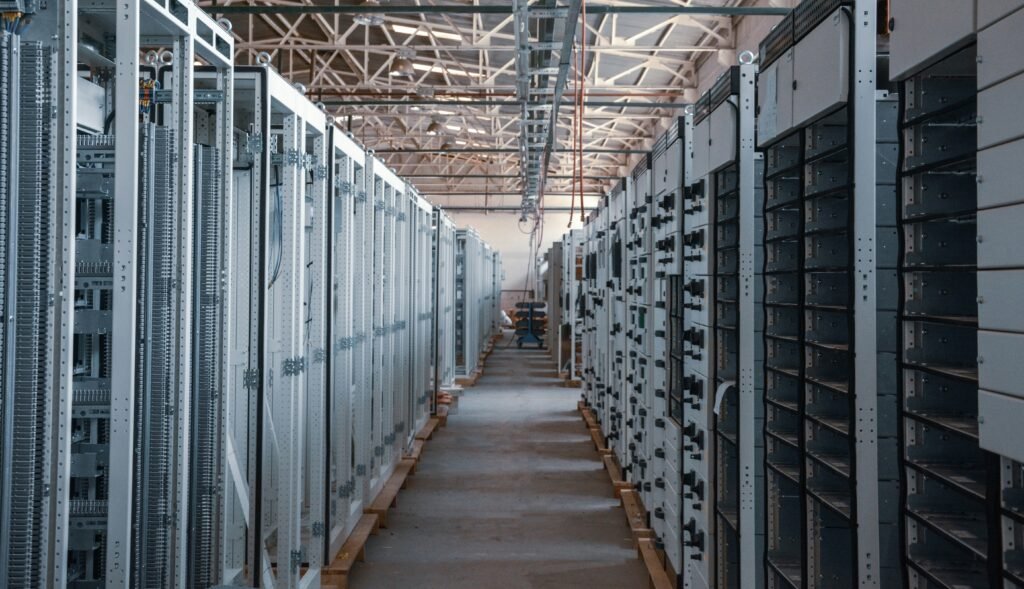

While some view this demand as a burden, it should be recognized for what it truly is: a critical investment in the infrastructure required to accelerate the global transition to a more efficient, intelligent, and sustainable energy future.
The expansion of data centers is not only about powering AI — it is about driving economic growth, strengthening infrastructure, and maintaining global technological leadership. The ability to support AI development at scale will directly influence competitiveness on the world stage.
This moment presents an opportunity to modernize the grid, invest in new technologies, and rethink how energy is generated, distributed, and consumed. It is not a crisis to be managed — it is a strategic opportunity to be leveraged.
Why “All-of-the-Above” Is the Only Viable Strategy
Meeting this demand will require a diversified, integrated approach. There is no single solution capable of addressing the complexity of the challenge.
An effective strategy must combine:
- Optimization of existing infrastructure
- Development of new generation across multiple sources — natural gas, nuclear, and renewables
- Deployment of behind-the-meter solutions, including on-site backup generation
- Continuous improvements in energy efficiency
At the same time, the industry must avoid what can be described as a “Goldilocks problem.” Overbuilding generation capacity can be just as problematic as underbuilding. Excess capacity can render existing assets uneconomic, leading to premature retirements and inefficiencies.
The goal is balance — ensuring that supply meets demand without creating new structural challenges.
The Real Constraint: Speed to Power
If demand is manageable, what is the real challenge?
The answer lies in speed.
Traditional timelines for building new power generation infrastructure range from 36 to 48 months. In contrast, data center developers are seeking power availability within 18 to 24 months. This mismatch creates a fundamental constraint.
Compounding the issue are bottlenecks in manufacturing, supply chains, and workforce availability. Critical components such as transformers and turbines are in high demand, with production capacity already stretched years into the future.
This reality underscores an important point: new construction alone cannot meet the pace of demand.
Unlocking Capacity: The Case for Optimization and Efficiency
To bridge the gap between demand and delivery, the industry must look inward — toward the assets and systems already in place.
Many existing power plants are operating below their full capacity. Increasing utilization rates can provide immediate, scalable solutions without the delays associated with new construction.
At the same time, data center efficiency must become a central focus. Current Power Usage Effectiveness (PUE) levels indicate that a significant portion of energy is used for cooling and ancillary functions rather than computation. Reducing this overhead can dramatically lower total demand.
Efficiency is no longer a secondary consideration — it is a primary lever for meeting future energy needs.
The Ecosystem Imperative: No One Solves This Alone
Perhaps the most defining characteristic of this challenge is its complexity.
Powering AI requires coordination across a vast and interconnected ecosystem:
- Semiconductor manufacturers
- Hyperscalers and data center operators
- Utilities and independent power producers
- Equipment manufacturers
- Regulators and policymakers
Each component of this ecosystem is interdependent. Delays or inefficiencies in one area ripple across the entire system.
This is not a challenge that any single organization — or even a single sector — can solve independently. Success will require collaboration at an unprecedented scale, with stakeholders aligning around shared goals and coordinated strategies.
Hummingbird Highlights The Missing Link: Stakeholder Engagement and Public Trust
While technical and operational challenges are significant, one of the most underestimated risks lies in stakeholder perception.
As data centers become more visible, communities are increasingly questioning their impact — raising concerns about land use, energy consumption, water usage, energy costs and environmental effects. This has led to growing local opposition in many regions.
While data centers are vital infrastructure, their visibility has sparked a wave of local resistance centered on resource competition. From agricultural land loss to spiking energy demands that can drive up utility bills for residents, stakeholders are challenging the current development model. This tension highlights a critical shift: communities are no longer passive hosts but active participants demanding greater transparency, ratepayer protection, and a measurable voice in how industrial growth impacts their local environment
At Hummingbird Communications, the solution is clear: proactive, transparent, and data-driven communication.
Organizations must engage communities early, clearly articulate the true costs and benefits to ratepayers, and build trust through consistent messaging, evidence-based dialogue, transparent communication, and stakeholder engagement. Data centers can no longer operate quietly in the background — they must actively participate in the communities they serve by establishing legally binding Community Benefits Agreements (CBAs), investing in local workforce development, prioritizing local procurement, and implementing transparent, sustainable, and shared-value environmental stewardship. Failure to engage transparently risks a future of mounting public opposition, costly legal delays, and a loss of the social license required to exist.
Policy and Regulatory Alignment: Enabling the Future
Regulatory frameworks must also evolve to support this new reality.
Current processes — particularly around interconnection, permitting, and backup generation — can introduce delays and limit flexibility. While these regulations are often well-intentioned, they must be adapted to reflect the speed and scale of modern energy demand.
Smarter, more responsive policies will be essential to unlocking progress and enabling innovation.
From Risk to Competitive Advantage
Organizations that recognize and address these challenges holistically will be positioned to lead.
Stakeholder engagement, once considered a supporting function, is now a strategic differentiator. Reputation risk is operational risk. Communication is not an afterthought — it is infrastructure.
Those who align their operations, messaging, and stakeholder strategies will not only mitigate risk — they will accelerate growth, influence policy, and shape the future of the industry.
From Complexity to Coordination
The convergence of energy and AI represents one of the most complex challenges — and opportunities — of our time.
Success will not come from speed alone. It will come from coordination.
It will require accurate data to guide decisions, collaboration across sectors to align capabilities, and strategic stakeholder communication to build trust by doing the right thing.
Organizations that embrace this integrated approach will not only meet the demands of the future — they will define it.
Learn how Hummingbird Communications helps organizations navigate complex energy challenges through integrated public affairs, stakeholder engagement, and strategic communications.


Recent Comments